
KOSPI’s AI warning starts to look like signal for Nasdaq

AzerNEWS Staff
Read moreFor more than a year, the artificial intelligence boom has seemed almost unstoppable. Nvidia became the symbol of a new technological era, Microsoft and Amazon accelerated spending on AI infrastructure, and investors rushed into every company connected to chips, data centers, or advanced computing. Along the way, a familiar question refused to disappear: is this another transformational technological revolution, or is it the formation of a financial bubble waiting to burst?
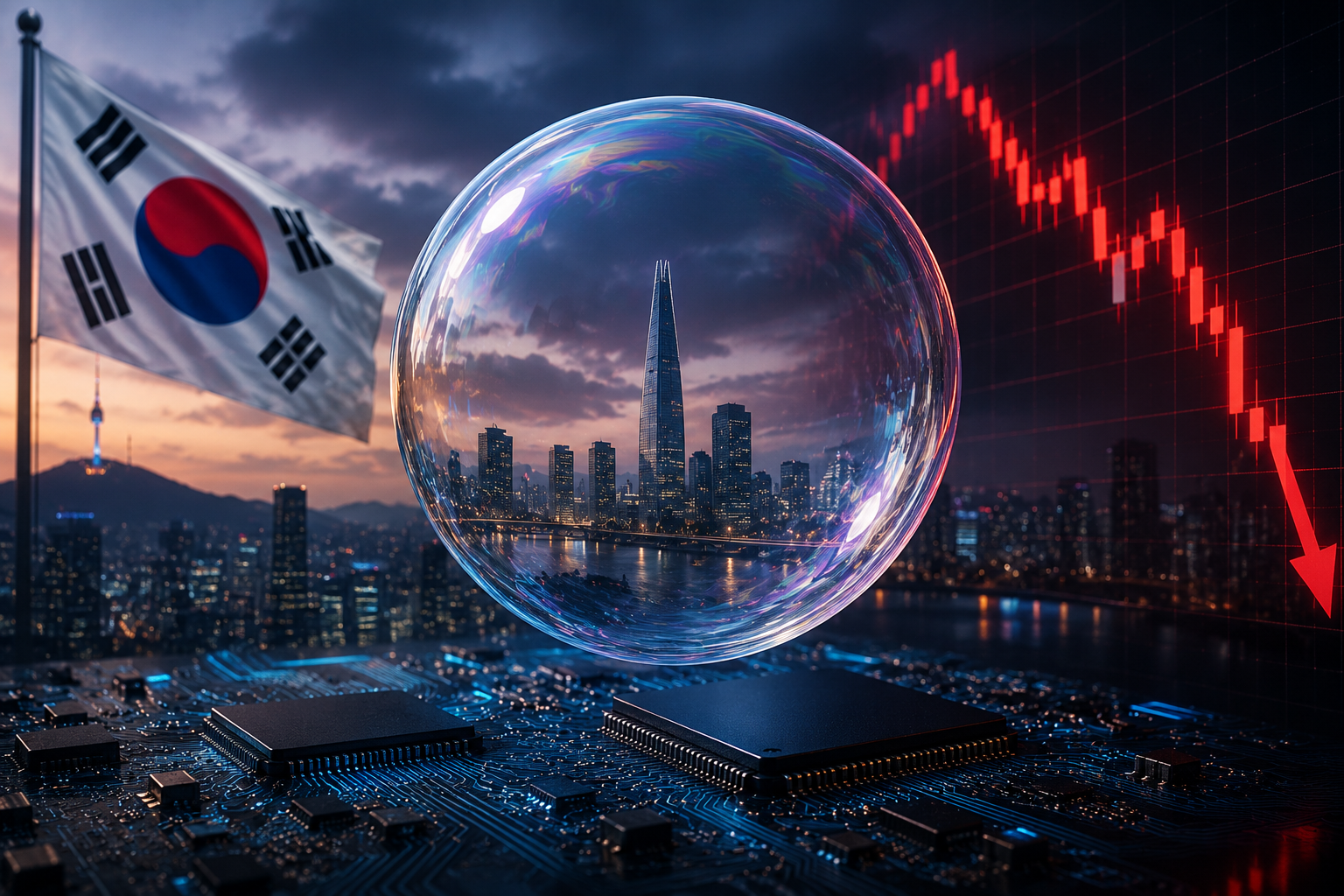
The recent turbulence in South Korea's KOSPI index offers an intriguing perspective on that debate. At first glance, comparing KOSPI with the Nasdaq-100 appears counterintuitive. One represents the stock market of a single Asian economy, while the other tracks the largest non-financial companies in the United States. Their economic foundations, sector composition, and investor bases are clearly different. Yet beneath those differences lies a surprisingly similar pattern. Both indices have become heavily dependent on a small number of technology giants whose fortunes are closely tied to the global AI investment cycle.
Nasdaq-100 has become the world's primary AI benchmark. Nvidia, Microsoft, Apple, Amazon, Alphabet, Meta, and Broadcom collectively account for well over half of the index's market capitalization. Every major advance in artificial intelligence, cloud computing, or semiconductor technology is reflected almost immediately in Nasdaq's performance. Investors increasingly view the index not simply as a measure of American corporate health but as a barometer of global enthusiasm for AI.
KOSPI tells a different story, but one that ultimately leads to the same destination. Rather than being driven by software developers or cloud providers, South Korea's benchmark is dominated by semiconductor manufacturers. Samsung Electronics and SK Hynix occupy an extraordinary share of the index, making KOSPI one of the most concentrated major stock markets in the world. These companies are not merely participants in the AI revolution; they are among its essential suppliers. Without advanced memory chips produced by Samsung and SK Hynix, the rapid expansion of AI servers and data centers would be impossible.
This structural similarity raises an interesting question. If Nasdaq represents the demand side of the AI revolution and KOSPI represents a critical part of the supply side, should investors interpret developments in one market as an early signal for the other?
That question has gained new relevance after KOSPI's sharp correction. Following an extraordinary rally fueled by surging expectations for AI-related demand, the South Korean market experienced a steep decline in a relatively short period. Such corrections are hardly unusual after prolonged rallies, but they inevitably revive speculation about whether investors have begun reassessing the extraordinary optimism surrounding artificial intelligence.
History encourages caution before drawing dramatic conclusions. Financial markets frequently experience powerful corrections without entering prolonged bear markets. During previous technological revolutions, including the internet boom, biotechnology expansion, and the rise of cloud computing, significant pullbacks often occurred even as the long-term growth story remained intact. Investors who confused every correction with the end of a structural trend frequently underestimated the resilience of technological innovation.
At the same time, markets also have a habit of sending subtle warning signals before larger adjustments become obvious. Excessive optimism rarely disappears overnight. It often fades gradually as investors question whether expectations have become detached from reality. When valuations rise faster than earnings, even outstanding companies can experience painful declines if future growth merely slows rather than collapses.
That is precisely why KOSPI deserves closer attention. Samsung Electronics and SK Hynix occupy a unique position in the AI ecosystem. Their order books, production capacity, pricing power, and investment plans provide valuable insight into the health of the semiconductor industry. If these companies begin experiencing weaker demand for advanced memory chips, the implications could extend far beyond South Korea. They could signal that hyperscale technology companies are moderating capital expenditure, slowing the pace of AI infrastructure expansion, or becoming more selective in their investments.
None of this proves that an AI bubble is bursting. The recent decline in KOSPI may simply represent a healthy correction following an exceptional period of gains. Demand for AI infrastructure remains substantial, cloud providers continue investing heavily, and technological progress has not suddenly stopped. Strong businesses often experience volatile share prices without suffering any meaningful deterioration in their underlying fundamentals.
Nevertheless, dismissing the South Korean market entirely would be equally unwise. Investors searching for early clues about the next phase of the AI cycle should remember that revolutions are built not only by software developers and platform companies but also by manufacturers producing the hardware that makes those revolutions possible. Semiconductor producers often feel changes in demand before they become fully visible elsewhere in financial markets.
Perhaps the real significance of KOSPI is not that it predicts an imminent collapse in AI-related equities, but that it reminds investors to look beyond Silicon Valley. If the AI revolution truly rests on a global supply chain stretching from California to Seoul and Taiwan, then its turning points may also emerge from unexpected places. Whether KOSPI's recent weakness proves to be nothing more than a temporary pause or the first whisper of a broader reassicing in technology stocks remains uncertain. Yet that uncertainty itself is worth watching. Financial history repeatedly demonstrates that the earliest signs of changing market sentiment rarely announce themselves loudly. More often, they begin as quiet questions that only become obvious in hindsight.
Here we are to serve you with news right now. It does not cost much, but worth your attention.
Choose to support open, independent, quality journalism and subscribe on a monthly basis.
By subscribing to our online newspaper, you can have full digital access to all news, analysis, and much more.
You can also follow AzerNEWS on Twitter @AzerNewsAz or Facebook @AzerNewsNewspaper
Thank you!